
The Main Cost Factors
- Appliance repair cost depends on the failed component, the model, and the labor needed for access.
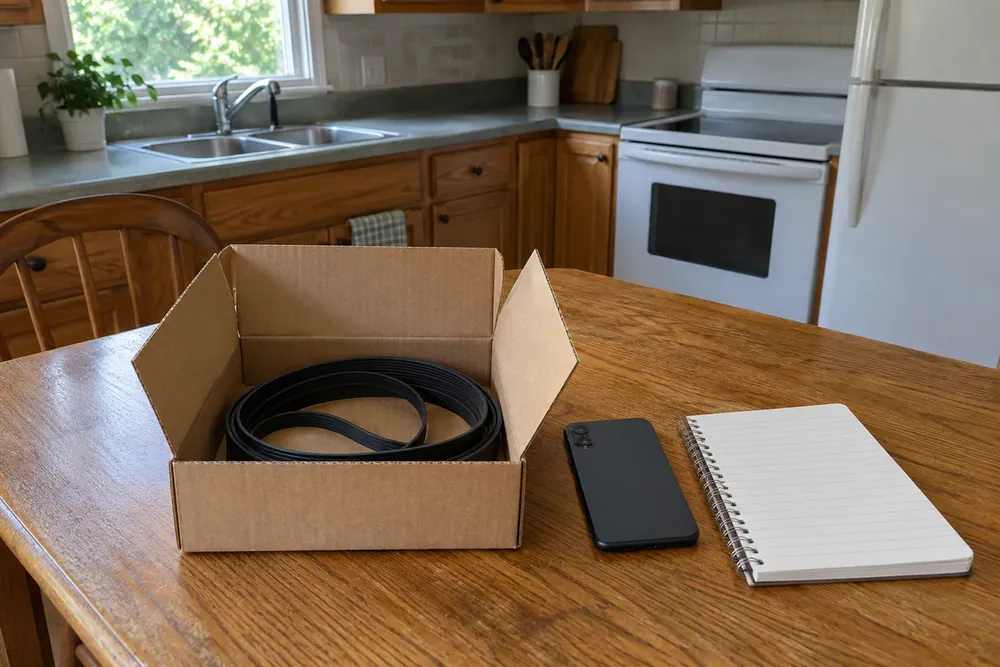
- A readily available belt usually involves less work than a sealed cooling system repair.
- Call about the symptoms; your technician explains the proposed work and its price after diagnosis.
The Fault and Access Shape the Repair
The repair depends on what failed and how much work reaching it takes.
- Similar symptoms can come from different parts, requiring different tests and repairs.
- Brand and model details determine which replacement components fit the appliance correctly.
- An ordered part can require another visit to complete installation and testing.
A washer that will not spin might have a door switch problem, a drive fault, or a control issue. The symptom alone does not establish which component needs replacement. Washer repair prices change with the diagnosis because replacing an accessible switch is different from reaching a motor beneath the tub.
Age matters through condition and parts support rather than a fixed cutoff. An older model with an obtainable part can be straightforward to repair. A newer appliance with an integrated control assembly can require a more involved job. Your technician identifies the fault, checks the correct component, and explains the proposed work. One of our local appliance repair partners discusses the scope and price with you before starting the repair.
Different Appliances Need Different Work
The appliance name matters less than the component and the work around it.
- Refrigerators and freezers may need cooling system work beyond a fan replacement.
- A damaged drum or tub involves more dismantling than an accessible belt.
- Gas and electric cooking appliances use different components to produce heat.
A refrigerator repair cost comparison needs to distinguish a gasket or fan from a compressor or another sealed system component. The latter involves specialized work on the cooling circuit. In an oven, an igniter fault and a failed control board involve different parts and testing; gas equipment is not automatically more expensive in every case.
| Appliance | What usually raises the price | What usually keeps it simpler |
|---|---|---|
| Refrigerator or freezer | Compressor or sealed system work | An accessible fan or door gasket |
| Washer | Motor work, bearings, or extensive dismantling | A separate switch or accessible pump |
| Dryer | Motor replacement or difficult cabinet access | An obtainable belt or separate switch |
| Dishwasher | Circulation pump assembly or integrated controls | An accessible fill valve or door latch |
| Oven or range | Electronic controls or difficult built-in access | An obtainable igniter or separate element |
| Microwave | Major internal components or fitted installation | An obtainable, separately replaceable component |
| Ice maker | Cooling faults affecting the refrigerator itself | A fault isolated to the ice-making assembly |
Dishwasher repair cost also reflects whether the appliance must be removed from its fitted space. With a built-in model, microwave repair cost includes the labor needed to reach the fault safely. Those access differences are separate from the part itself.
Installation and Timing Add to the Scope
Restricted access and extra visits can change the work even with the same fault.
- Stacked laundry units can require extra handling to reach the affected appliance.
- Built-in equipment may need careful removal to protect surrounding cabinets and surfaces.
- After-hours timing can affect the service charge, so discuss timing during your call.
For stacked equipment, dryer repair service cost can include labor to separate and reposition the units safely. Leave that handling to your technician. A replacement part that must be ordered can also mean a return visit for fitting and operational checks. Ask which visits and tasks the proposed price includes so the comparison covers the entire repair.
Start With the Symptoms on the Call
Call with the problem as you know it; diagnosis establishes the repair scope.
- Describe whether the appliance stopped suddenly or became less effective over time.
- Read the model label during the call when it is safely visible.
- Share the exact display code without assigning a meaning to its letters.
Say what changed: a noise, a leak, a stalled cycle, or food that no longer stays cold. Mention an existing built-in or stacked installation during the conversation. No research or dismantling is needed to start the call.
A page cannot reliably price an unseen fault because symptoms overlap and access varies. Your technician checks the appliance before identifying the repair. For a leaking or malfunctioning machine, switch it off at its controls if safe; keep refrigerator or freezer doors closed when cooling has failed. For the next decision, read about repairing or replacing an appliance.