
A Decision Based on Condition
- Repair usually makes sense for an isolated refrigerator fault when the cabinet remains sound and parts exist.
- Replacement becomes more reasonable when an old refrigerator needs major sealed system work or has widespread deterioration.
- Call for diagnosis so the decision reflects the actual fault, overall condition, and complete replacement work.
Compare the Fault With the Whole Appliance
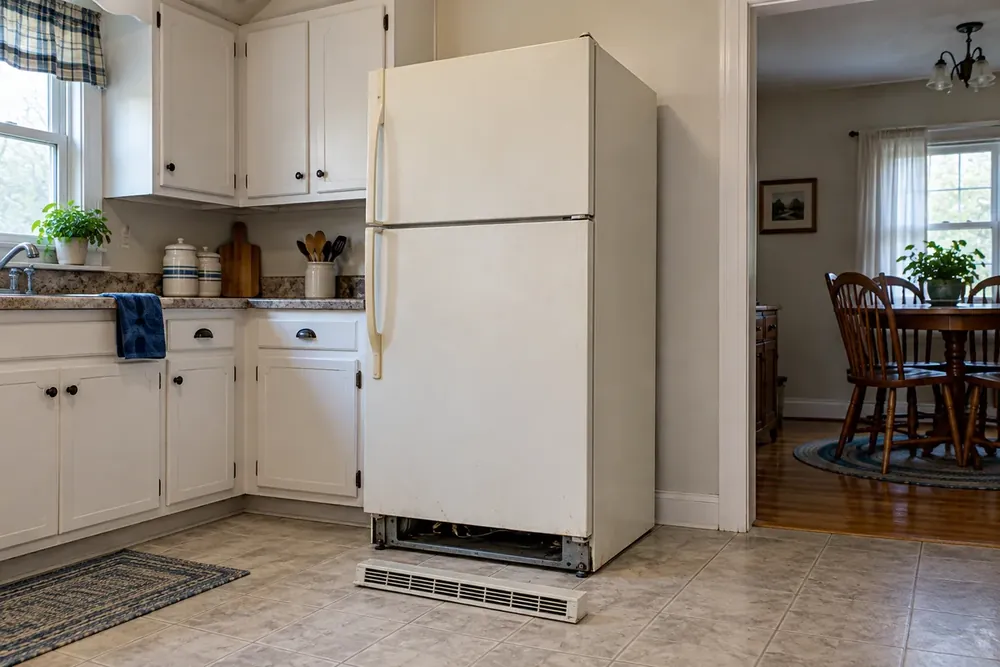
An isolated part failure favors repair; lasting structural damage makes replacement more sensible.
- A working cabinet and obtainable components give a targeted repair more value.
- Repeated unrelated failures can change the decision even when each is repairable.
- Replacement involves delivery, installation, and disposal as well as buying the appliance.
Deciding whether to repair or replace appliances starts with the fault, not a guess from the noise or display. A fan that has stopped moving air is a different problem from a failed sealed cooling system. Both may leave a refrigerator warm, but their repairs have very different scopes.
Repair vs. replace decisions for a refrigerator turn on the diagnosis and the condition of the rest of the appliance. A sound cabinet with a replaceable fan or gasket can justify repair. Major cooling work on an old unit with worn doors and recurring faults makes replacement more persuasive. Call to discuss the symptoms; one of our local appliance repair partners explains the repair scope and its price before work proceeds.
Repairable Parts and Reasons to Replace
Compare the part that failed with damage that replacing a component will leave behind.
- Belts, door switches, and fill valves can be sensible replacements in sound appliances.
- A cracked washer tub can undermine the value of replacing smaller components.
- A rusted-through dryer drum changes the decision beyond simply restoring its rotation.
To repair or replace a refrigerator, compare the confirmed failure with the cabinet, doors, and cooling system together. The table gives starting points for that conversation, rather than diagnoses you can make from symptoms alone.
| Appliance | Usually worth repairing when | Usually time to replace when |
|---|---|---|
| Refrigerator or freezer | A fan, gasket, or switch fails in an otherwise sound unit | An old unit needs major sealed system work and has other deterioration |
| Washer | A pump, belt, or door switch fails without wider damage | A cracked tub makes a lasting repair impractical |
| Dryer | A belt or separate switch fails and the drum remains sound | A rusted-through drum accompanies extensive wear |
| Dishwasher | A fill valve, latch, or pump fails in a sound machine | A damaged tub or repeated major failures undermine repair value |
| Oven or range | An obtainable igniter, element, or sensor needs replacement | Essential controls are unavailable or the appliance has extensive damage |
| Microwave | An obtainable door switch or control part solves an isolated fault | Cabinet damage or an unavailable essential assembly prevents a practical repair |
Repair a dishwasher with an isolated fill-valve fault; replace one when tub damage makes a durable repair impractical. Your technician checks which situation applies. Microwave assessment and internal work belong with your technician, even when the suspected component is small.
Age, Energy Use and Parts Support
Age adds context, but condition and parts support determine whether repair remains practical.
- A discontinued essential control board can prevent repair regardless of appliance appearance.
- Compare energy labels for similarly sized replacements rather than assuming automatic savings.
- Consider how reliably the existing appliance has met your household's daily needs.
There is no universal birthday when every appliance should be discarded. An older, simple model with an obtainable pump may still meet the household's needs. A newer appliance can be difficult to restore when its essential electronic assembly is no longer made.
For a dryer, repair vs. replace comparisons should include the drum, motor, and history of repeated faults. Energy use belongs in the same conversation, but a replacement's operating savings depend on its design, household use, and the model being replaced. Compare the complete repair cost factors with delivery, fitting, and removal rather than deciding from one part alone.
Disposal Is Part of Replacing an Appliance
Arrange an appropriate disposal route when replacement becomes the chosen option.
- Ask whoever handles removal which appliances they accept and how collection works.
- Refrigerant recovery belongs with the disposal professionals, rather than a household repair attempt.
- Keep unwanted equipment out of ordinary recycling containers intended for smaller materials.
Under Hardin County's recycling rules, drop-off locations accept only rinsed plastics #1 and #2, rinsed aluminum and tin cans, non-greasy cardboard, and newspapers; appliances are not on that list, so ask the solid waste department about an appliance separately. Its solid waste department lists Pearl Hollow Landfill and disposal resources; discuss the specific appliance and required preparation before arranging transport.
For Bullitt County, the county department directory lists its Recycling Center in Shepherdsville. Use that contact to ask about the route for your particular appliance, including metal recycling and refrigerated equipment. The directory does not establish acceptance of every appliance, so arrange the disposal details before hauling an old unit.
The U.S. EPA safe disposal requirements place responsibility on whoever carries out final disposal to make sure refrigerant has been recovered from refrigerators and freezers before they are disposed of. Ask the removal service how recovery is handled; leave cooling circuits intact. Disposal planning follows the repair decision and does not need to delay your initial service call.